
The Rise of Invisible Control

We don’t need to be controlled anymore.
We just need to believe we’re choosing.
Memetic Tees
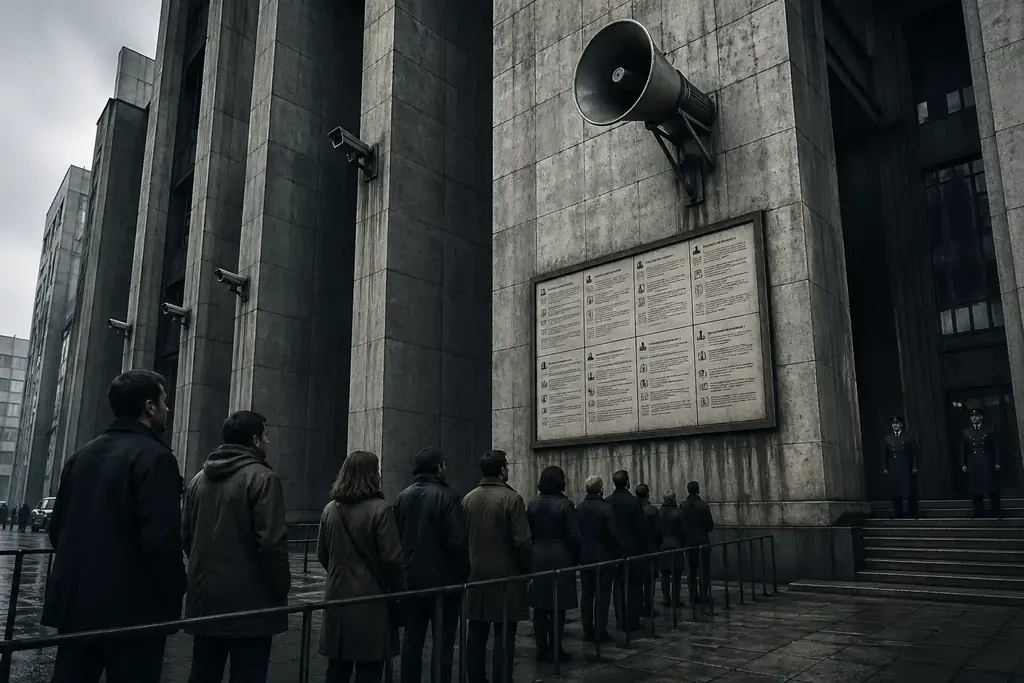
Control was once easy to recognize: walls, rules, uniforms, commands.

There was a time when control was obvious.

It had a face, a voice, a set of rules you could point at.
You knew when you were being told what to do.


That’s no longer the case.

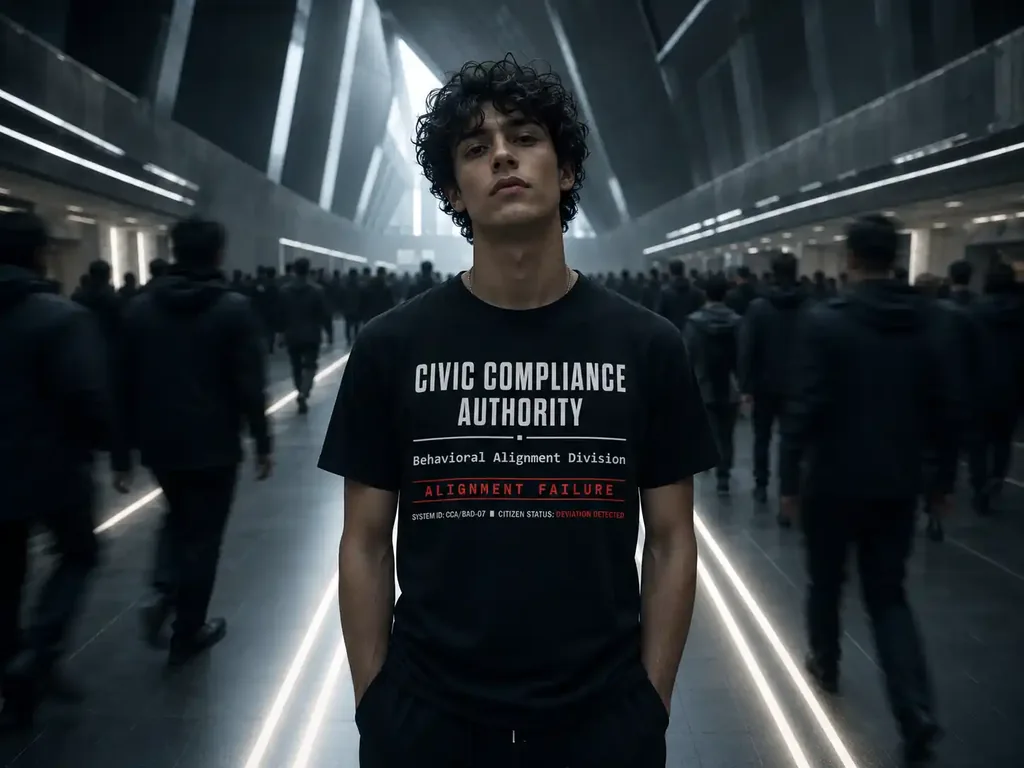
Young man walking through a near-future city surrounded by digital guidance interfaces symbolizing invisible control and behavioral alignment
The new systems don’t command us. They make one path feel obvious.

Control today doesn’t feel like control.
It feels like convenience.
Like optimization.
Like progress.


We are guided by systems we barely understand.

A person sits alone at night in front of multiple glowing screens, but instead of showing normal content, the screens emit streams of light that form a soft cage around the person.
What we see shapes what we choose. What we repeat becomes who we are.

Algorithms shape what we see.
Interfaces guide what we do.
Feedback loops reward what we repeat.

Not by force.
By design.


And the most effective systems don’t restrict behavior.
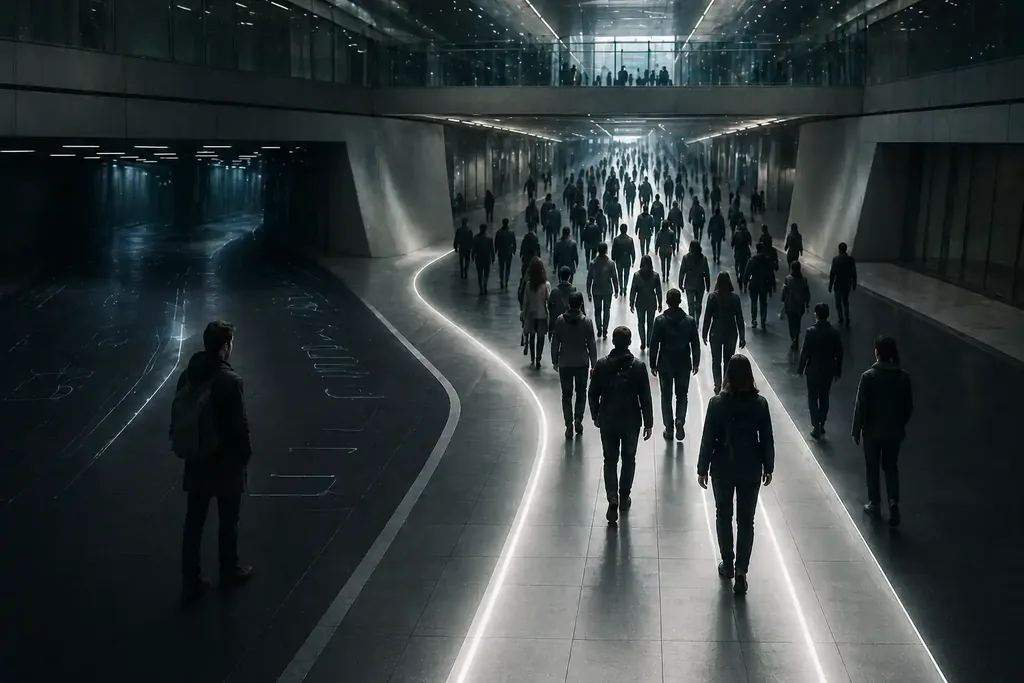
A large group of ordinary people walk through a clean, modern transit hub or shopping concourse.
You are free to choose — inside a system designed to make the choice for you.

They align it.

They make certain choices feel natural.
Others feel inefficient.
Or invisible.

You don’t have to obey.
You just… won’t resist.

This is not necessarily a dystopia.

There are benefits:
– less friction
– more efficiency
– better outcomes

But there is also a trade-off.

If a system can shape your behavior without you noticing…
Where does your agency end?

Maybe control doesn’t look like control anymore.
Maybe it looks like a well-designed system
that you willingly participate in.

And maybe that’s why it works.


CIVIC COMPLIANCE AUTHORITY

Behavioral Alignment Division
ALIGNMENT FAILURE

a human model wearing a black t-shirt with the provided “CIVIC COMPLIANCE AUTHORITY — ALIGNMENT FAILURE” design printed clearly on the chest.
The city optimizes compliance. The individual introduces error.
The model stands still inside a vast modern transit hub while a crowd of commuters moves around them in a smooth, coordinated flow. The crowd follows subtle glowing guidance paths on the floor.
Deviation detected in a system built for alignment.
The model is standing in a dimly lit room at night, surrounded by multiple glowing screens, abstract recommendation panels
When the feedback loop fails to contain the human.

Wear the deviation

Wear what you think.

Signal list

Get the next signal

New concepts, the thinking behind them, and notes from the design process. Sent when there is something worth sending.


Your address is used only to send this newsletter. It is never sold or shared.

Leave a Reply

Your email address will not be published. Required fields are marked *