
Something here started paying attention.
For most of the history of the universe, nothing did. Hydrogen collapsed into stars. Stars made heavier elements and threw them back out. Rocks formed, cooled and turned in the dark, and none of it was observed by anything at all.
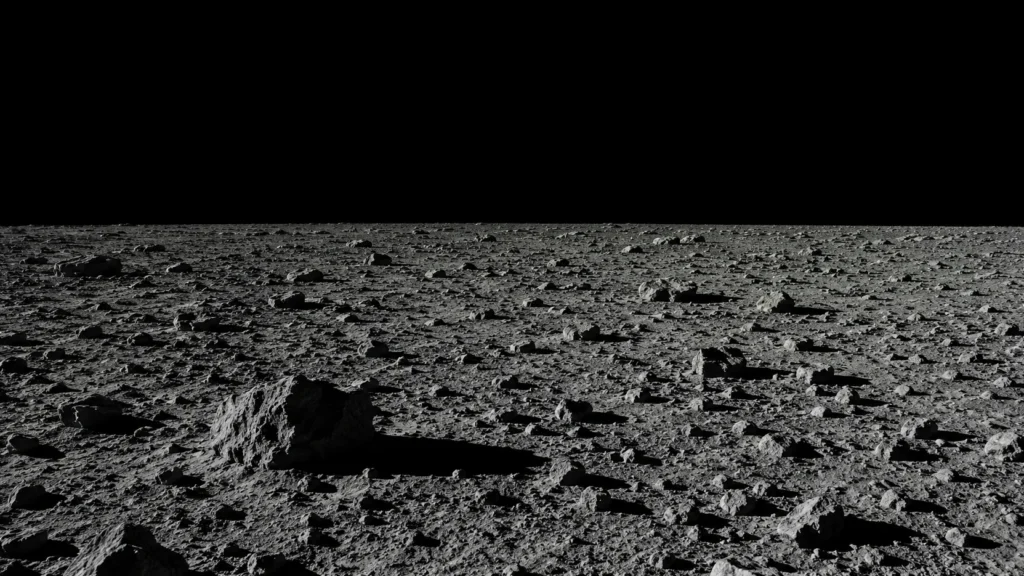
Then on one of them, chemistry produced matter that could ask what it was made of.
We don’t know how. We don’t know whether it happened anywhere else. We know it is unconfirmed everywhere else, which for engineering purposes is the same thing.
The only known instance
It is tempting to say the thing at risk is the planet.
It isn’t. The rock will be fine. It has survived impacts, ice and long silences, and it will keep turning long after the question stops being interesting.
What has no copy is the thing that noticed.
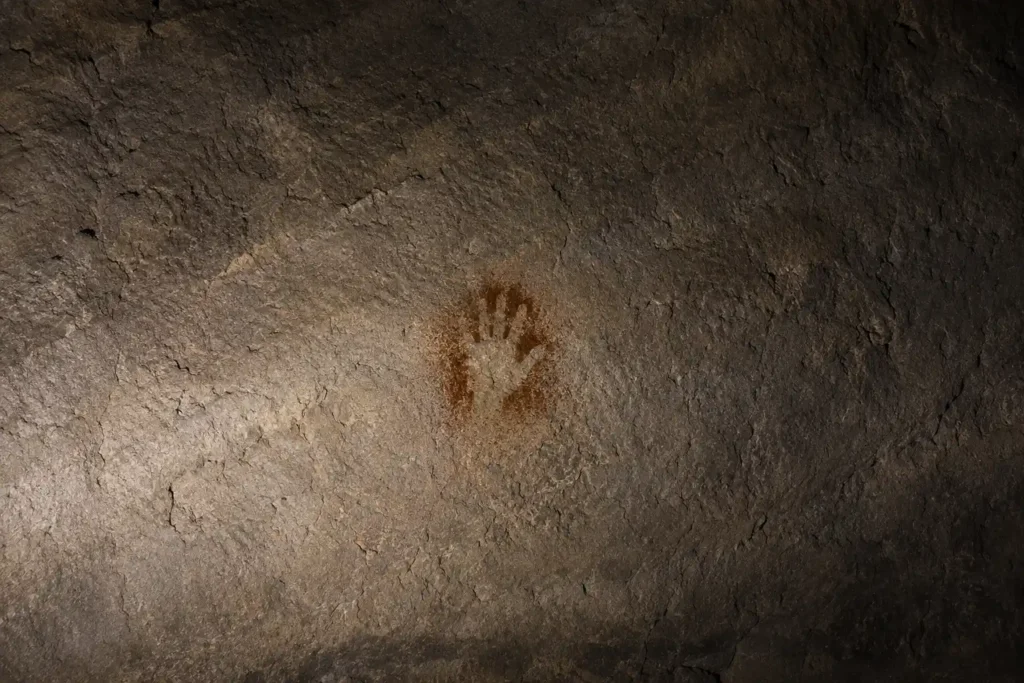
Not the species — the capacity. Matter that can be wrong about itself and correct itself. Every archive, every language, every instrument we built to look further out than we can see: one instance, one location, nothing held in reserve.
Redundancy
Every system we take seriously gets a second one.
Banks mirror their ledgers.
Aircraft fly with three of everything.
The photographs you would run back into a burning house for are on a drive somewhere, and in a datacentre you will never see.
We call it redundancy. It is the most boring idea in engineering, and the only reason anything survives contact with reality.
It is not optimism. It is the opposite of optimism. It assumes failure and builds anyway.
Now count the copies of the only thing we know of that can think.
One planet. One biosphere. One operational node.
No failover. No standby. Nothing warm, waiting.
The window
The other assumption worth examining is that this is a problem we can get to later.
Capability is not monotonic. It can be lost.
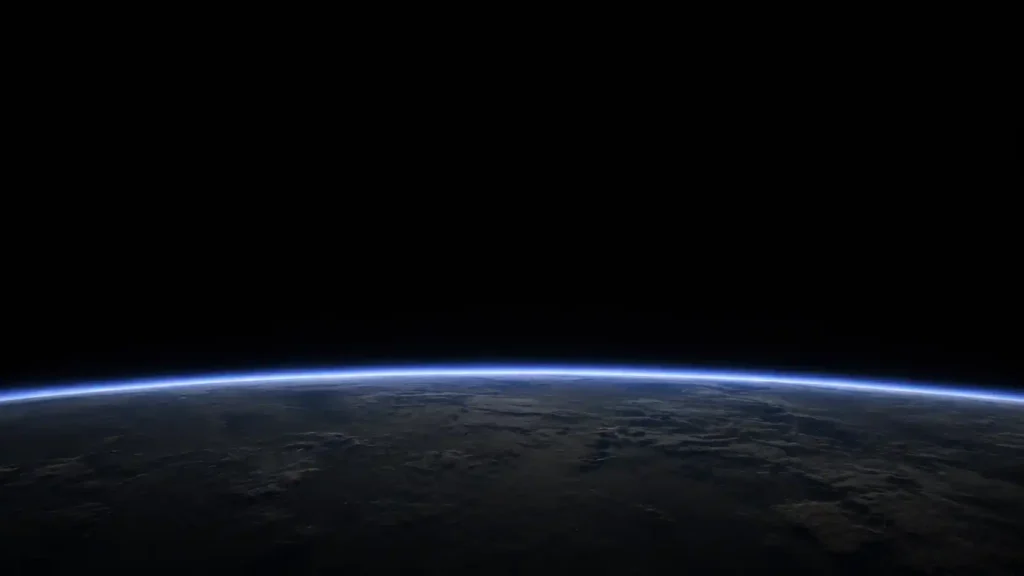
We are used to a century where the graph only went up, and it has made us careless about the fact that this is not a law. Windows close for unremarkable reasons: an economy contracts, an institution stops caring, a generation forgets how a machine worked and nobody wrote it down.
A civilization that can build a backup and doesn’t is not being patient.
It is spending a margin it never earned.
Arithmetic
This is not an argument for going anywhere in particular. It is an argument about arithmetic.
A system running a single instance of itself is not resilient. It is lucky.
And luck is not a design decision. It is the absence of one.
Thirteen billion years produced something that could look back and ask. We have never made a copy of it.
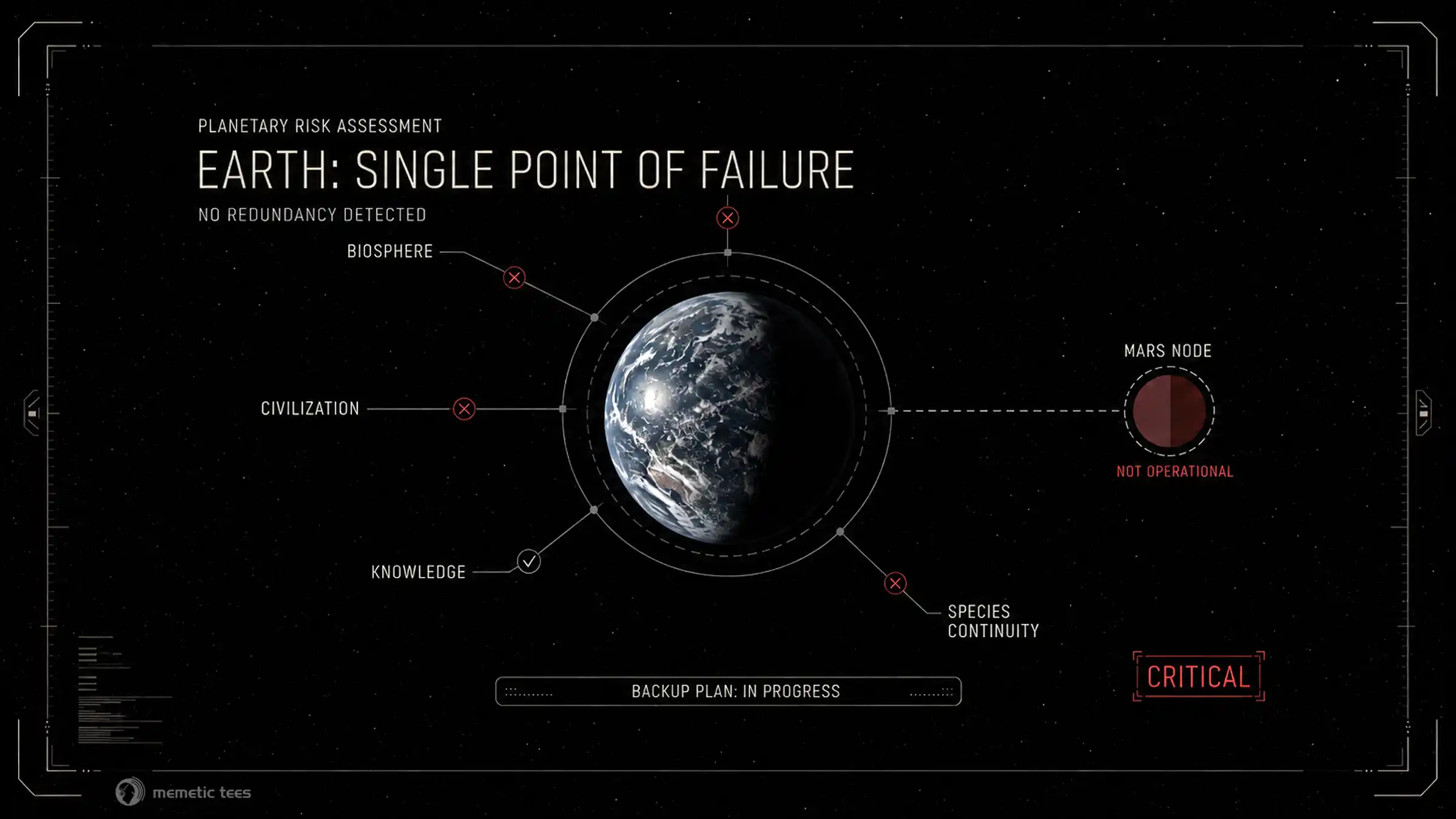
PLANETARY RISK ASSESSMENTNO REDUNDANCY DETECTEDFAILOVER SYSTEM: NOT FOUNDMARS NODE: NOT OPERATIONAL
A report nobody filed.
Wear what you think.
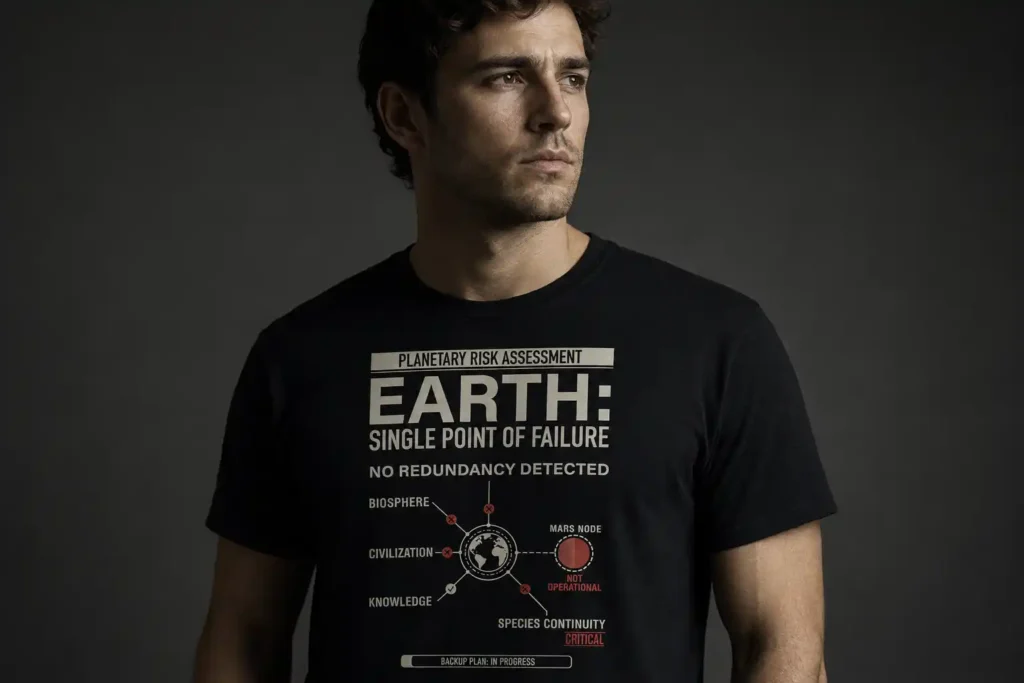
The design is EARTH: SINGLE POINT OF FAILURE — the assessment, printed as an assessment. On shirts, hoodies, mugs and totes, printed and shipped in your region.
Leave a Reply